


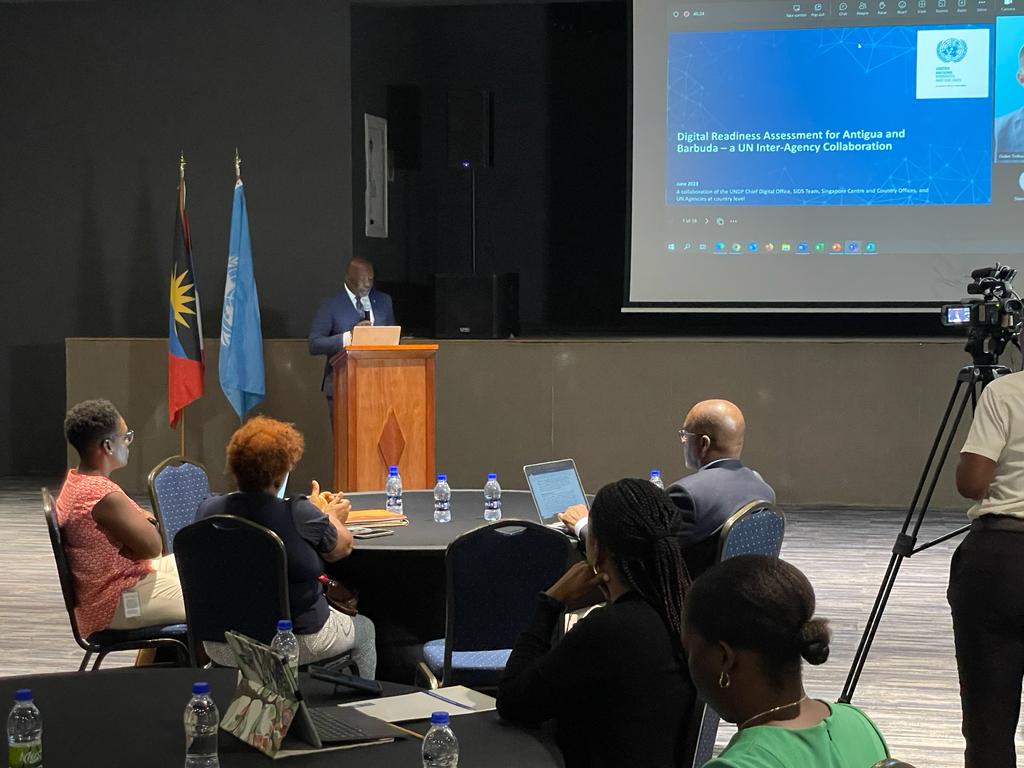


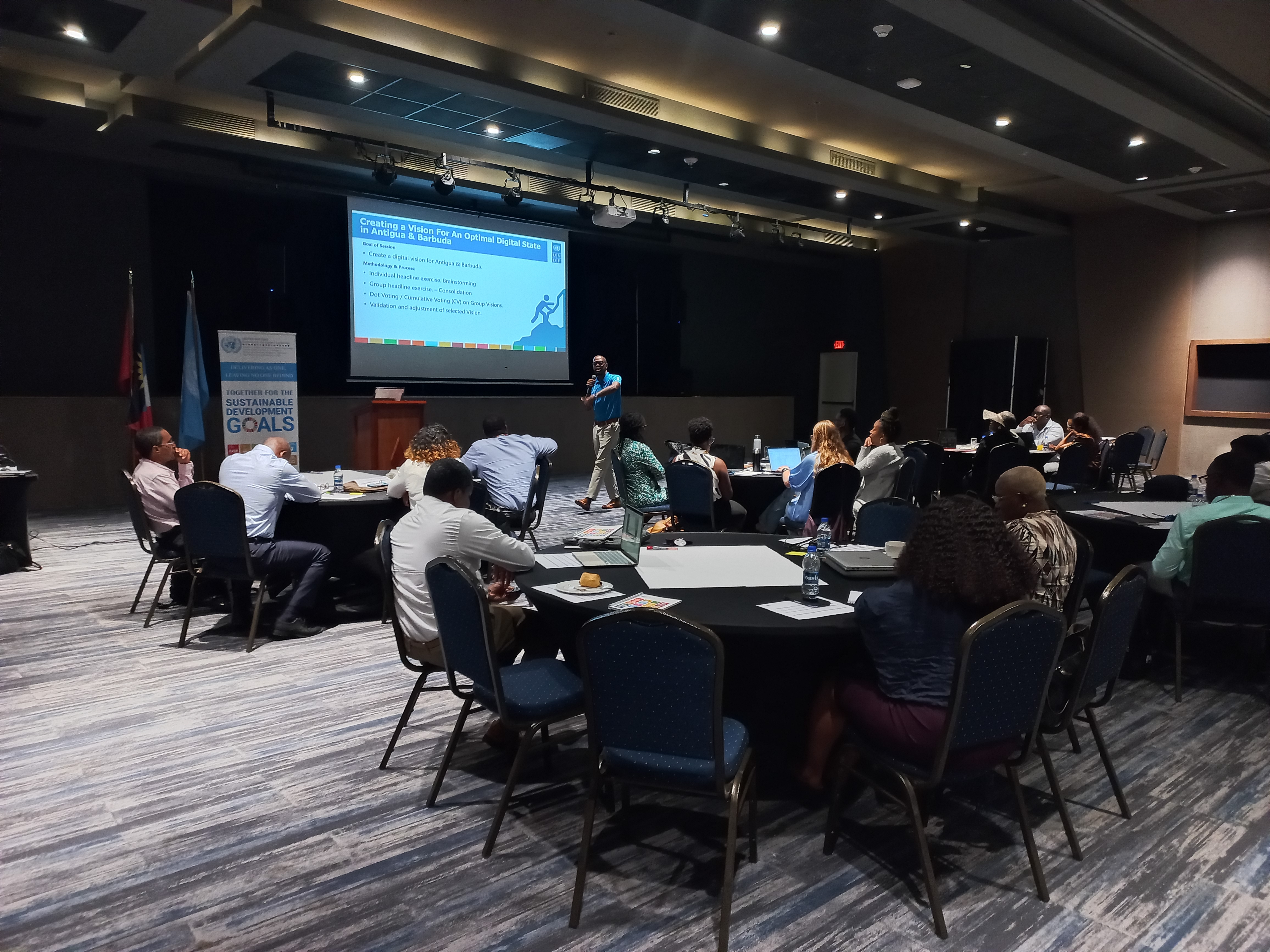
Following an official request by the Government of Antigua and Barbuda for support in creating a Digital Transformation Framework (hereafter Framework), the United Nations Development System (UNDS) supported the development of a Framework that will inform a national digitalization strategy to promote and enhance digital transformation in agriculture, disaster risk and resilience, education, cultural and creative industries, government and the delivery of public services, financial services, health, tourism, and leisure sectors.
The UNDS supported the digital transformation framework initiative using a phased approach. Phase 1 focused on the Digital Readiness Assessment (DRA), and included a desk review, a digital transformation workshop with a stakeholder survey, a public outreach campaign with a public survey, data analysis, a draft report and final report. Phase 2 was an interagency effort that focused on four critical outputs: digital assessments, project concepts/proposals, a draft roadmap, and a final roadmap.
The Framework initiative was guided by the Prime Minister of Antigua and Barbuda, Hon. Gaston Browne and the Ministry of Information, Communications and Technology, through its Minister, Hon. Melford Nicholas and its Digital Transformation Focal Point and supported with technical expertise and resources from several UN agencies including the UNDP, UNESCO, UNICEF, ITU, PAHO and the Resident Coordinator Office (RCO). The Prime Minister’s vision is to “transform the digital landscape of Antigua and Barbuda [with aspirations] to create a smart island in Barbuda”.
Programmes and Initiatives lead by the United Nations Development System
As digital transformation requires a multi-sector approach, the UNDS continues to support digitization in several thematic areas including social protection data to ensure the most vulnerable are targeted as beneficiaries for assistance, climate and disaster risk reduction, statistical systems, etc.
The Resident Coordinator’s Office (RCO)
The RCO through its convening and coordinating power effectively mobilized the UNDS to respond to the Government’s request and provides additional guidance and support to the UNDS in its execution of the digital transformation framework.
The United Nations Development Programme (UNDP)
To support Digital Transformation, the UNDP has been leading the Digital Readiness Assessment (DRA), which is a survey-based tool designed to offer quick, high-level insights into a country's digital strengths and opportunities. It serves as a starting point for increased collaboration between governments, UNDP Country Offices, various UNDP experts, and international development partners. The assessment is user-friendly, adopting a mixed-method approach (survey, literature review, quantitative analysis) to provide real-time insights related to the 2030 Agenda, recognizing technology as a foundation and enabler. Its inclusive nature ensures actionable and tailored results to promote digital transformation, coordination, and clarity across government and society, enabling countries to leverage digital technology for achieving the Sustainable Development Goals and ensuring digital inclusion for all. Thus far, 31 DRAs have been completed, with many occurring in the Caribbean, including in Dominica, Grenada and Trinidad and Tobago. The DRA for Antigua and Barbuda is in progress.
The DRAs fall into the overarching UNDP Digital Strategy for 2022-2025, which builds upon the success of its previous strategy and aims to create a world where digital technology empowers people and benefits the planet. The strategy focuses on three interconnected objectives: integrating digital technology into all aspects of UNDP's work, promoting inclusive and resilient digital ecosystems that uphold human rights and inclusivity, and leading by example in embracing technological advancements. By leveraging existing initiatives such as the Accelerator Labs, Digital Advocates Network, and IT transformation, and by enhancing the digital skills of its workforce, UNDP seeks to amplify its support to partners and achieve a multiplier effect on development outcomes.
The United Nations Educational, Scientific and Cultural Organization (UNESCO)
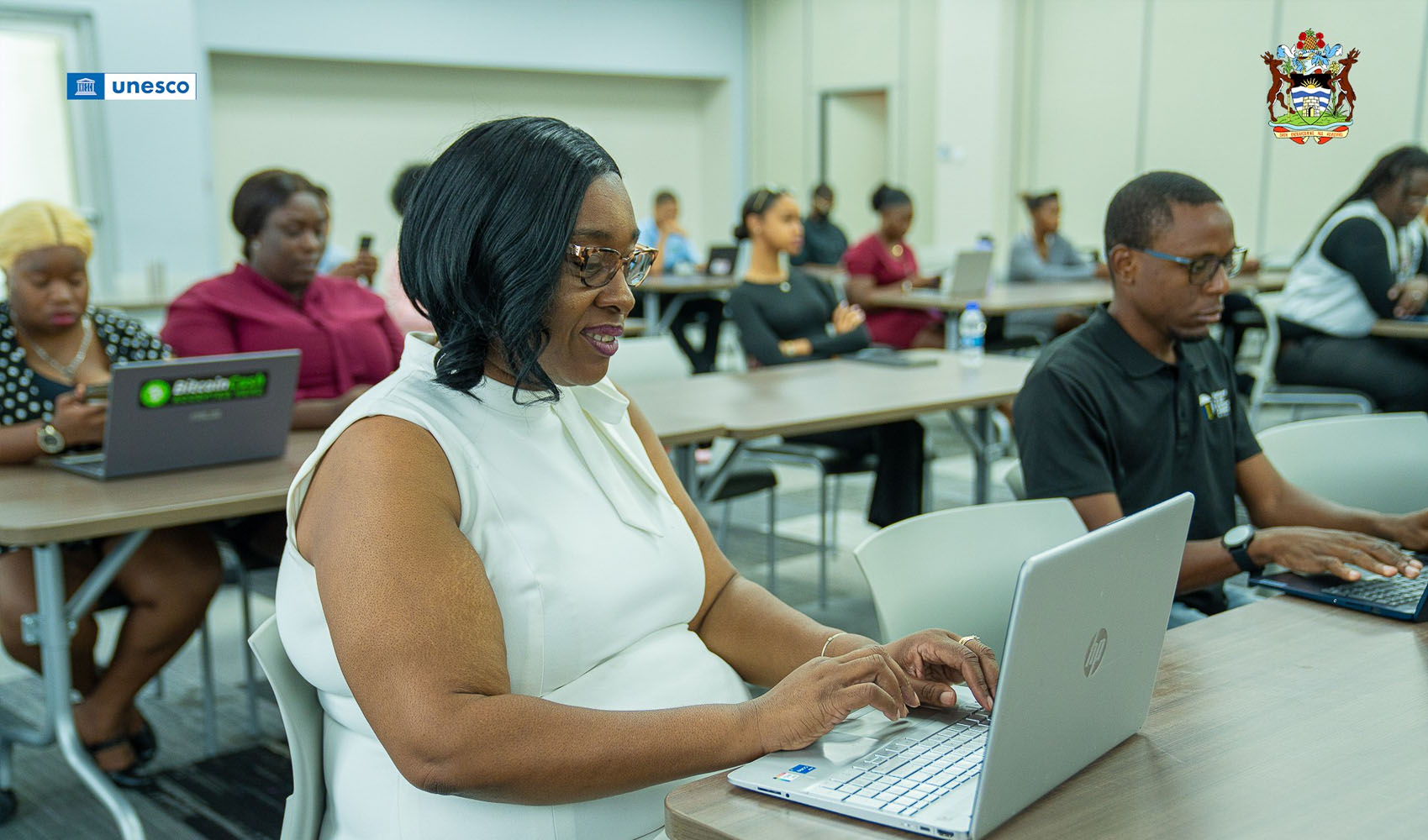
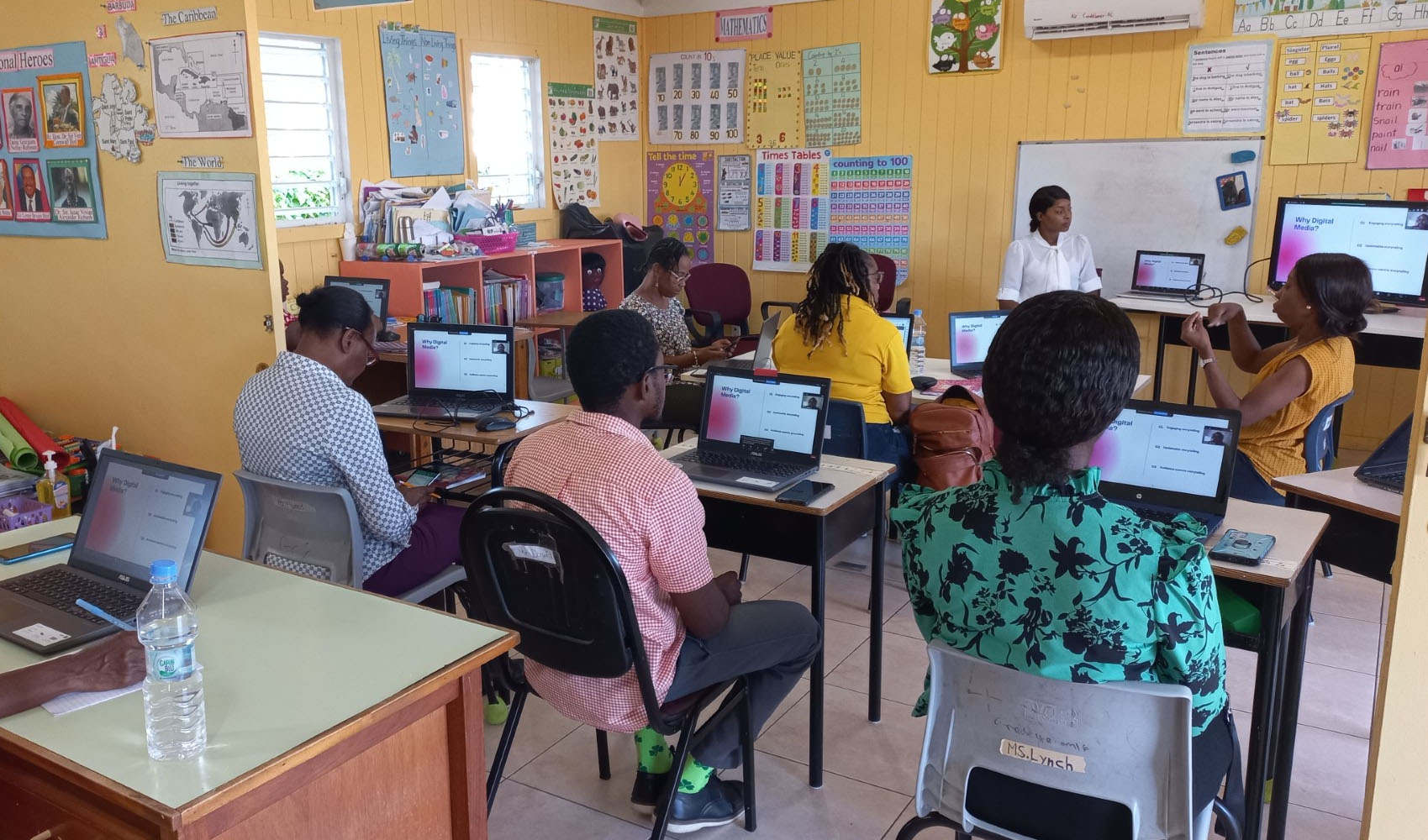
UNESCO is a leading actor and responsive partner in supporting the journey to digital transformation in Antigua and Barbuda. Through efforts in education and communications skills training and equipment donations, UNESCO has supported the upskilling, awareness and sensitization of multistakeholder groups in Antigua and Barbuda about the immediate and long-term benefits of digital transformation to enhancing the way they live, work, play, and do business. Among the areas of meaningful engagement by UNESCO are digital, media and information literacy, misinformation, disinformation and online hate speech, digital mental health management, the legal rights of youth stakeholders related to online and media engagement, digital media communications and the use of digital technologies by educators for persons with disabilities.
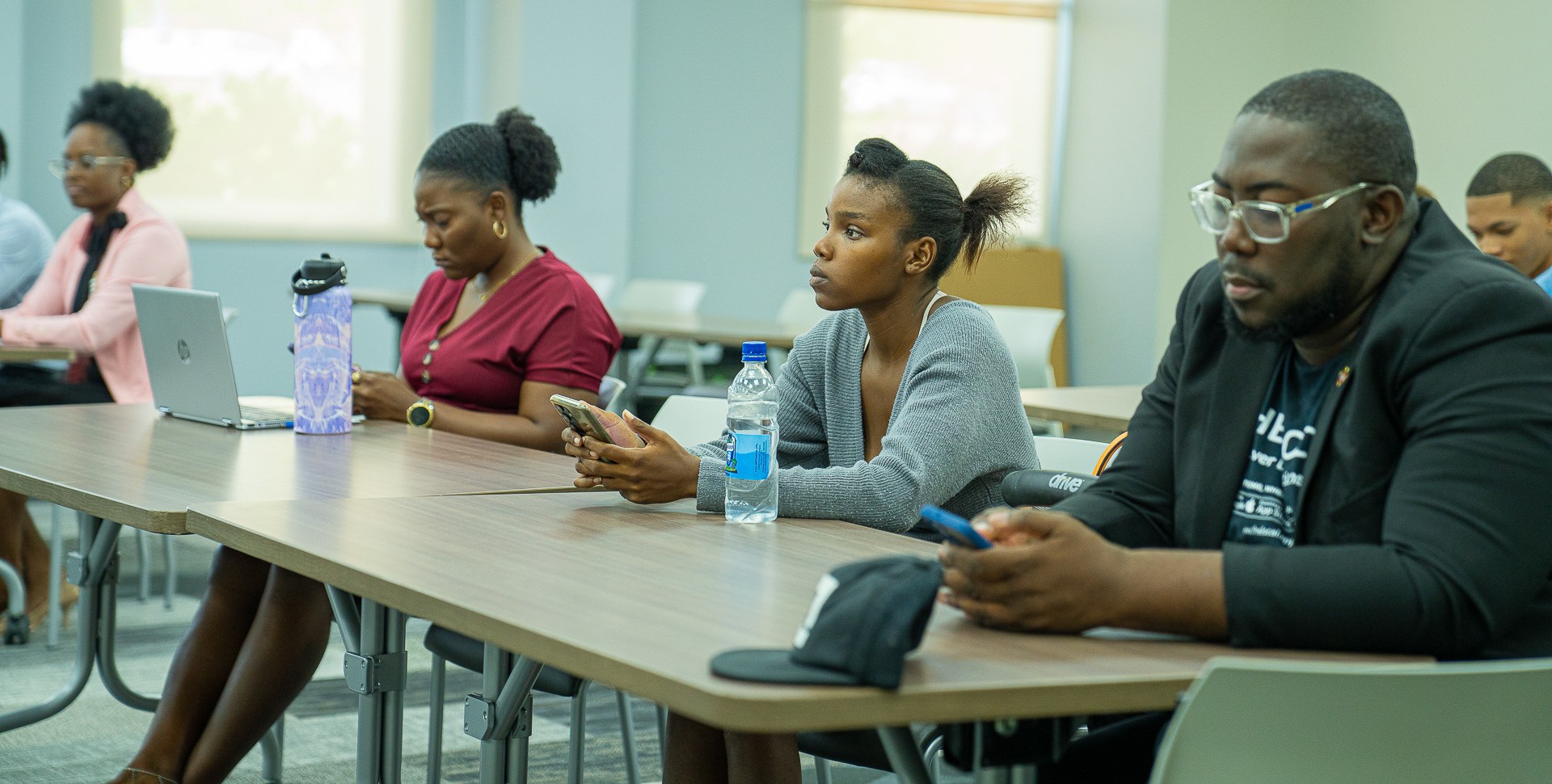
In Phase One, UNESCO was a key partner in the UN Digital Readiness Assessment and heavily supported actions related to the public infomercial campaign. In Phase Two, UNESCO collaborated with the Ministry of Education to execute the Youth, Media and Information Literacy Engagements in March and April 2024. The initiatives aimed at empowering youth and promoting inclusivity by equipping young people and people with disabilities with essential digital skills and MIL competencies. Through these initiatives, 338 stakeholders, 46 youth organizations, and 3 disability organizations were empowered with skills vital for a connected, resilient Caribbean.
Since October 2024, UNESCO has supported the coordination and execution of work related to establishing a digital transformation webpage in Antigua and Barbuda in collaboration with the Ministry of ICTs and the RCO. The webpage acts as both a repository of the work completed in Phases One and Two and as a platform to communicate future initiatives executed by government and UN partners in this area.
The United Nations Children's Fund (UNICEF)
UNICEF has introduced pioneering work in social protection with the development of the Humanitarian cash Operations and Programme Ecosystem (Hope), designed to support the distribution of emergency cash assistance to those in need during Covid-19. High volumes of data are required to ensure the right people are reached and Hope manages this data safely and effectively.
In addition, a new national management information system (MIS) is being developed, allowing complete digitization of social assistance data for the first time. Again, the new MIS will ensure enhanced financial support to vulnerable households through accountable and efficient processes in line with the recently passed Social Protection Act 2020.
Similarly, work is being undertaken in the education sector supporting the digitization of approved curricula and digital access to lessons in multiple subject areas to assist the expansion of inclusive learning for the nation’s children and young adults.
The Pan American Health Organization (PAHO)
The Pan American Health Organization (PAHO) is leading efforts to advance the digital transformation of the health sector in Antigua and Barbuda, aligning with global priorities like the UN Roadmap for Digital Cooperation and leveraging regional partnerships to build resilient, data-driven health systems.
Key accomplishments include the implementation of the District Health Information Software (DHIS2) at major facilities like the Sir Lester Bird Medical Center and Jennings Health Center. These systems offer user-friendly dashboards that provide real-time access to vital health indicators such as births, stillbirths, and delivery types. Alongside these tools, PAHO has enhanced workforce capacity by training healthcare professionals on the Perinatal Information System (SIP Plus), empowering them to deliver improved maternal care.
PAHO is also driving improvements in national systems, particularly Civil Registration and Vital Statistics (CRVS). Collaborative efforts with stakeholders, including the Ministry of Health and Civil Registry, have streamlined processes and introduced international standards like ICD-11 for more accurate disease and mortality reporting.
In collaboration with the Antigua and Barbuda Government and a public foundation, the SIDS Data Hub aims to integrate publicly available datasets from across Caribbean and OECS countries, creating a centralized resource to support decision-making. The hub focuses on leveraging digital public goods, such as PAHO's open data and WHO's developing Global Health Facilities Data Hub, to promote transparency and evidence-based planning.
PAHO supports ongoing discussions around establishing a Center of Excellence for Data Analysis, a proposed initiative to enhance data analytics capacity for Small Island Developing States (SIDS). While interest in the initiative is strong, commitment from stakeholders, including PAHO, will depend on clear agreements and defined roles.
Geographical Information Systems (GIS) are becoming integral to health and other sectors. PAHO is collaborating with regional partners to address GIS challenges, such as the lack of standardized addressing systems, which limit its utility. In the health sector, the organization is working with the Ministry of Health to update and harmonize health district boundaries, ensuring they reflect current healthcare operations. This effort aims to standardize disparate mapping systems across health, environmental health, and immunization zones, enabling more efficient data use and analysis.
PAHO has contributed technical and strategic support:
- Advocating for integrating open data and digital public goods into the SIDS Data Hub.
- Providing guidance to strengthen GIS capabilities and optimize health district mapping.
- Partnering with the OECS Commission and other stakeholders to address regional challenges in GIS and data analysis.
- Supporting efforts to harmonize health district boundaries and standardize addressing systems.
PAHO’s future commitments are:
- Expressed interest in supporting the Center of Excellence for Data Analysis, pending finalized project details.
- Continuing dialogues with regional partners including the OECS to identify actionable steps for collaboration and capacity building.
- By combining technological innovation, capacity building, and strategic partnerships, PAHO is helping Antigua and Barbuda—and the wider Caribbean—prepare for a digitally empowered future in health.