 The Official Government Website of Antigua and Barbuda
About Barbuda
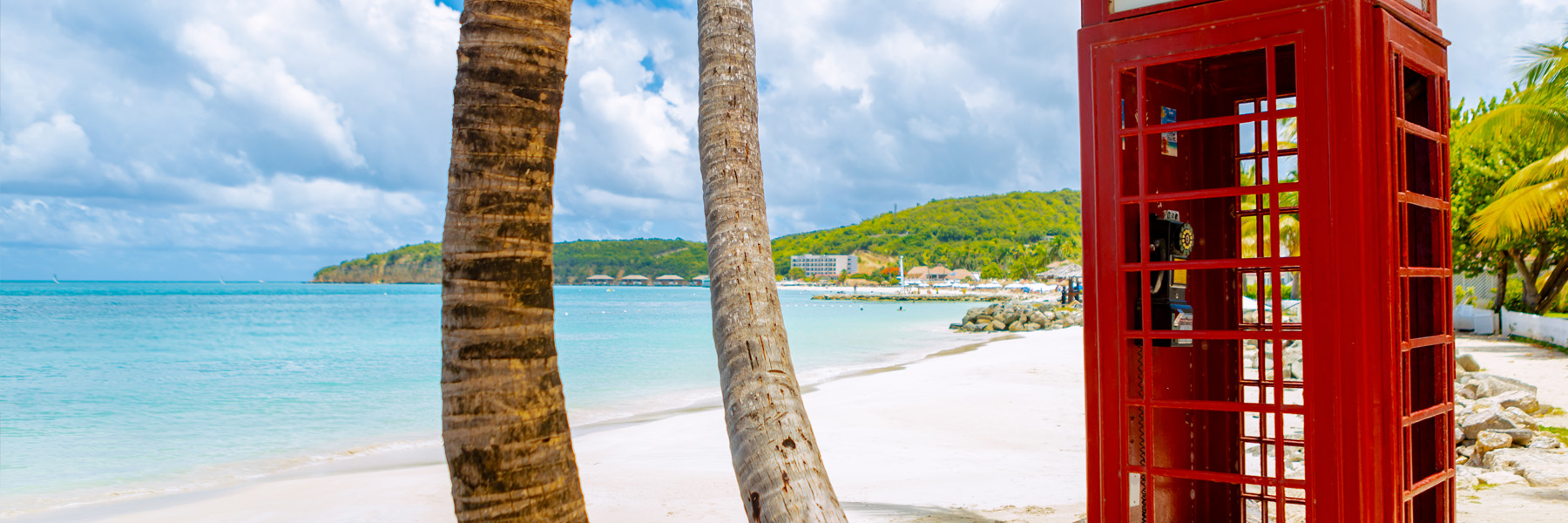
Barbuda is a very flat island of limestone formation lying approximately thirty miles north of Antigua. Its highest elevation is about 128 feet in an area known as the Highlands. Barbuda boasts the finest beaches in the Caribbean one of which is located at Coco Point. Its population numbers around 1400 souls. It has had a long history of dependence, first as a private leasehold of the Codrington family (1685-1870), later as a Crown colony and then as a dependency of Antigua. For many years the political relationship between Antigua and Barbuda has been an uneasy one but with the recent success of the United Progressive Party at the polls, bold steps have been taken to improve this situation and a member of the Barbuda Council (which was formed in 1977) now sits as a member of the Cabinet of Antigua and Barbuda.
When Barbuda became a part of the new state of Antigua and Barbuda in 1981, its natural endowments were disrupted. It was clear that its small scale productive economy that relied in an earlier century on the salvage of ship wrecks, fishing, hunting and farming, and still does to some extent, could not continue to support the needs of a growing population. Thus many emigrated but kept in touch with the homeland, making remittances to their families from time to time. There are now plans for the development of additional projects similar to the one at Coco Point.
Over the past three decades, its natural resources, particularly its beaches, have become vulnerable to commercial exploitation. Sadly, Barbuda has benefited fractionally from the vast revenues drawn from the sand mining industry over the years and its environment is now in danger of being seriously impaired. Its many coral reefs that surround the island make it dangerous for shipping but at the same time provide a haven for fishing and scuba diving. It is virtually a hunter’s paradise where wild boar, deer, guinea fowl, pigeons and ducks are in abundance.